Wisdom

The problem with wisdom is that it seems desirable until one has a bit of it, and then it slowly dawns that wisdom comes, but always with a cost. Indeed, it is debatable whether it is even worth attaining. Plus, the more one has the more one sees how unreliable the whole thing is. And oh, so, slippery! So unpredictable. And unverifiable. As soon as it starts to satisfy it also turns into a set of slow steps down into its most authentic form of Silence. Silent noticing.

There is no doubt that Wisdom comes to everyone, from time to time, and changes us. But can you ask for it? Or ‘Her’? Or even ‘Him’? Can you even identify it when it comes?

I am not sure if Wisdom is a new friend, or an old one. There was a long time ago when I saw a glimmer of light and put my foot on the road to get to it, and picked up my Bible, and started to read. I had Questions. It was a trap! It’s always the questions that Wisdom loves. And Wisdom always loves to give us more.

The beginning of this wisdom, I am told, is quite the riddle…. The beginning of wisdom is this: Get wisdom, and whatever else you get, get insight. (Proverbs 4 verse 7 NRSVA)

OK, so how does that pan out? We’re supposed to get it by simply ‘getting it’? What?…. The fear of the LORD is the beginning of wisdom, and the knowledge of the Holy One is insight. (Proverbs 9:10 NRSV).

So, intrigue opens up the door. And fear of GOD helps us begin. But then, quite how….. and when…. will we ever know if it has come to us?

Aaaaah!….. and Shhhhhh!

Just shut this down!

(I do not think that we are meant to know).
Candlemas

Thought for the Month – February

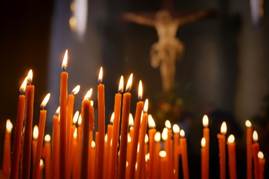
February is coming, and in many churches it opens (on 2nd) with a lovely celebration called Candlemas. The event has a back story in older winter festivals and weather lore, but came to be called Candlemas because candles are lit in it, representing those that used to be brought to church  for blessing during  the final weeks of winter. Making it possible to use the dark hours for craftwork, and lifting the spirits.

Candlemas is also the time when people remember the story of Mary and Joseph bringing Jesus to the Temple, 40 days after his birth, and the thing that has drawn my attention to it this year is the way that the visit to the Temple introduces two completely new and intriguing characters right at the end of the Christmas Story (Luke 2:22-40).

Both characters were (appropriately) old people.  One is Simeon, an aged Temple priest, and the other, Anna, a childless widow (aged at least 84), who had served and prayed in the Temple for most of her life.

Simeon was so delighted to encounter the baby Jesus that it made him feel ready to die! He created a wonderful song about the encounter which is still used by millions of Christians in evening prayers.  Anna – who wasn’t usually seen in public – came out at the moment the baby was being presented, and was equally thrilled, and started speaking out loud to people about their hope for the future.

This story is beautiful in the way it draws us in, and invites us, even now, to throw off any temptation to be afraid of what is happening in the world, and to keep on celebrating the important things in life. Things like being part of a wider ‘family’… and the presence of a baby. Things like the coming of more light, and the gift of hope.

Womens’ Group

Women’s Group met this evening, for its new first time. In our Conservatory. Yes! And it was great.

It was just what I had hoped for, and all the better for having been so long in coming.

As I set out chairs for it I felt excited. I was not being ‘cool’ at all. A group of women of mixed age and stage, most of whom I know quite well, were going to meet and we were starting something up. We were all, it seems, very keen to gather, and very keen to study scripture, and develop spiritually. Especially me.

I may be convening this, with the help of Nicola, and also Karen. It may be at my house. I may be taking the lead on what we’ve started. I may be trained and experienced in small group work. I may love doing it. But the truth is very, very clear – that I am right in this with the others, in our group. Right in.

Since retiring I have been missing fellowship around a shared wish to grow closer to others and to God. The gift of being able to do so is present at church on Sunday, and in other things I do, but there is something oh so sweet about the feeling of safety and welcome in what used to be called a time of ‘fellowship’. Though in this case maybe it is ‘sistership’?

We felt it right to open James – the Book of James. It is a short letter purporting to be from James the Apostle that found its way into the far back of the New Testament. We opened James at page 1 to read from it. Chapter 1. Verse 1. Then we began with where we mostly come from, and are going next: “My brothers and sisters, whenever you face trials of any kind, consider it nothing but joy…” (James 1 v 2 NRSV).

I remember this verse best from the bible where I first encountered it, before the RSV became a new version of itself, the NRSV: “Count it all joy, my brethren, when you meet various trials, for you know that the testing of your faith produces steadfastness. (vv 2,3)”. It still rings a bell for me, that verse, and, as our Women’s Group talked, it soon was clear that I am not alone in that.

This evening Women’s Group began, and so did something new.

In the wake of Publication of the Makin report and resignation of Archbishop Justin Welby

Oh dear. Oh very far too dear.

I entered today’s meeting of the Council for Christian Unity this morning, scarred already by the Makin Report (read over two unhappy days). Knowing in my bones that our Archbishop Justin would need to offer resignation. It was the best thing and the only thing that he could still do for our spiritually stunted Church at such a time of horror.

I didn’t want to see him go. There is far too much self-righteous glee… such ‘cancel culture’ mentality… around in far too many quarters. It’s also far too easy to throw blame for toxic culture onto those who represent it. They sacrifice, and then the rest of us find it easier to relax. Not to repent. So weak. So blatantly unchristian.

I left the CCU meeting head in hand. We’d shared fresh prayers from a well of family sadness, in the company of kind, sensitive, ecumenical partners: for the victims of abuse, and the ignorance of those who tired to keep it quiet for whatever unworthy mix of old or limping reasons.

We all know that the truth will always soon be shouted from the housetops. We have lost an archbishop who was trying to unravel things, and has rightly done the only thing he still had left to help. A bit.

May God hold our feet to the fire long enough for it to change what we do with our feet, and with the power of our lives. May God hold this sorry mirror to our eyes who are still a part of such a lazy, self-referent, unchrist-like culture that has been coasting on its witless, faded glory for far too long, and could continue doing so unless we change.

Letter to the Guardian

This is a response to the article I have heard the fears of fellow Jews as UK antisemitism soars. But we will not bow to racism (msn.com)

Dear Sir or Madam

Christians like me are uber-alarmed to hear that antisemitism is causing Jewish citizens to be afraid again. Our constant question is “What can we do to stop this?”, and it propels us into prayer that God will comfort and encourage them.

When we pray we ask God to empower everyone to resist the hatred anti-semites feed off, and give us power to do so individually and in other ways. We need to challenge people revisit the politics that paved the way for the Holocaust.  We cannot tolerate a resurgence of the scourge of antisemitism. 

Christians go deeper than this as well, recalling the historical movements within early Christianity that pitted the early believers against their Jewish parents. We regret their failure to prevent the longer-term effects of this, and stop it in its tracks. We repent of the effect it had on history that Jews became branded as the ‘other’. We will not allow this to carry on.

Antisemites are merely foolish people who want ‘someone to blame’ for something that annoys them. Stoking antisemitism is just one way of deflecting public discontent and manipulating people to gain power over them.

Christians are not mandated to ‘eliminate’ ignorant people but to work to change their minds. The first step on the way to that is to stop these people pushing all of us around. 

Lisa Battye

09/08/2024

Oneness is not Uniformity

The following was published in the BLIMP (issue 103). BLIMP is the weekly newsletter for the ordinands and other students in Emmanuel Theology College.
This week’s editorial is written by one of our Chaplains, the Revd Canon Lisa Battye….

Jesus prayed: ‘I ask … that they may all be one. As you, Father, are in me and I am in you, may they also be in us, so that the world may believe that you have sent me.’ John 17:20,21 NRSV

On July 5th (2024) the end of the General Election campaign will coincide with the beginning of the next Group of Sessions of the Church of England’s General Synod. We are likely to be feeling quite well informed about National Politics, but I wonder how many of us – even those preparing for ordination in the CofE – know what’s on the agenda of the latter?

One thing we can be sure of is there will be something about human sexuality on the agenda. The issue is taking Synod on a very long journey, and sometimes it feels as though Synod members are caught up in a battle between competing theologies. When humans feel embattled, they don’t think much about what it means to be ‘one’ in Christ.

Battles are painful. It’s no wonder people often expend energy distancing themselves from ‘the other side’! Less contact makes it easier to listen only to one’s own and near-by voices. But separating out to lessen the pain of disagreement is not what Jesus prays for in his final prayer.

At a time like this the experience of training side-by-side with people with whom we just do not agree is not only formational, but increasingly important for the future Church. There is a lot to be gained from seeing people that I think have ‘got it wrong’ being treated with as much respect as myself.

Theological colleges like ours provide an opportunity for us to foster the kind of oneness that Jesus prays for in John 17. This oneness is not uniformity. It is something that springs from each of us being ‘in Christ’ in the way that he and the Father are mutually within.

God is Love, so the oneness Jesus is praying for for us is more akin to the mutual flourishing of people who are ‘in Love’. And the point of this unity is in the prayer: It’s what our oneness says to the world about Jesus. He prays that we might be one ‘… so that the world may believe’ that he is who he is.

Day Ten again

The surprises keep coming. The phrase יַנְחֵנִי בְמַעְגְּלֵי-צֶדֶק is so well known, and even my new interlinear Hebrew and English bible translates it as meaning ‘He guides me in straight paths’ but being unfamiliar with the verbs meant I had to dig a bit deeper. Of course. Why not. I’m on retreat!

יַנְחֵנִי comes from the root that means ‘to rest’ or ‘to set down’, and a מַעְגְּלֵ is not a road, or way but more specifically, a track or trench-like path, and צֶדֶק is familiar, meaning righteousness, not only straightness. How difficult it must have been for the translators of this well-known psalm to settle on the English words they’d use for us!

Perhaps David, thinking back to his days in the hills with the sheep, is not talking about being guided on straight paths, but being set down in tracks of righteousness – the kind of tracks one follows when hill-climbing in the countryside. Small, sometimes rucked and not so easy to negotiate with clumsy walking-boots. Or set into tracks – set ways – of being which are righteous, rather than straight.

Straightness has an astringent ‘feel’ to it – it gives me to feel that the path ahead will be easier to negotiate than the kind of sheep-tracks we traverse when we walk the hills. Living righteously can be thought of similarly – as something quite straightforward, when, in fact it’s full of twists and turns. I’m just as likely to have hiccups in the flow when living righteously as I am to ‘crookle’ in the sheep-tracks on the moors. (Now there’s a word! To ‘crookle’ is a word they use in Rochdale, where rickets was once rife, and means the experience of one’s heel giving way when walking… it’s over quickly, and doesn’t cause a sprain, but interrupts the flow of walking).

So let me try to translate this for myself, today…. not as ‘he guides me in straight paths’ but, rather, ‘he sets me down in tracks of righteousness’ or, even, ‘he sets down tracks of righteousness in me’. Well, I do hope so!

Day Ten

It’s been a whole week since I last published anything about the retreat, and the temptation to simply ditch the attempt to record it is strong. During that week I decided to make the blog password protected, too, and to take my notice about it off Facebook, so now it feels like I am just writing for myself, which may be a good thing, because there is nothing like writing just for oneself to help one know what is going on.

And yet… is what we say in our hearts about the truth actually the truth? It seems to me that the heart is deceitfully wicked, and I cannot know what it is to be righteous. One minute my effort to be objective about something tells me that ‘this’ is the truth, the next it is ‘that’. Sometimes I even begin to think that this pendulum exists because there must be a sense in which both are true, all at once!

So when I read נַפְשִׁי יְשׁוֹבֵב in verse 3 of Psalm 23 and found myself rolling the meaning of יְשׁוֹבֵב around in my head I was intrigued, and then alarmed, because on examination that word seems to imply quite a lot more than simply ‘he restores [my soul]’. One commentary suggests translating יְשׁוֹבֵב as ‘he repents’ (in the sense of ‘he causes [my soul] to repent’). I even discovered the same letters, used as an adjective, meaning ‘apostate’ or ‘backslider’.

Being restored to something benign and being caused to repent sounded quite different until, after further detective work in the thick books littering my desk, I traced the whole thing back to a primitive root שׁוֹבֵ that simply conveys the concept of ‘turning back’, or ‘retreating’.

So that’s settled… what this is about for me today is really quite easy: ‘He causes my soul to [be on a] retreat’.

Day Three

 מִזְמוֹר לְדָוִד. is how Psalm 23 starts, and it’s been difficult to get past this first line as I reflect and wonder. It is usually translated as ‘A song of David’ but the first of these Hebrew words (read right to left, of course) sounds like mizmoor and comes from the verb זמר (zamar), which means ‘to pluck’. When I think of the title as a ‘Plucking of David’ it evokes for me an imaginary picture of David playing his lyre and singing simple songs that as a boy he’d made up in the fields while tending sheep and later sang to comfort King Saul in the palace long before responsibility for the kingdom shifted onto David.

Perhaps there is also something for me in the thought that the words I’m reading have been ‘plucked’ from God to remind us who God is. It also causes me to remember how, in my girlhood decision to make Jesus my LORD I felt ‘plucked’ from simply being alive into the strange experience of feeling ‘chosen’ to become a follower.

Another thing that hinders me today from moving on within the psalm is noting where it sits within the Hymn-book of the ancients: I find it nestling between Psalm 22, which describes the suffering that Jesus identifies with while being crucified, and Psalm 24 which calls the world to open its gates to the King of glory. Psalm 23 addresses neither suffering nor glory, but rather the period of time between the cross and the return of the LORD almighty… the time I so often think of merely as ‘my life’, and take so much for granted.

An Epiphany Retreat

The Lord is my shepherd, Psalm 23 Funeral Poem

It’s 6th January 2021 and I’m starting an epiphany retreat. My plan to go elsewhere to engage with a guided retreat in person has been scuppered, thanks to Lockdown 3, so I am going solo, in my prayer-room, using a ‘retreat-in-a-bag’, bought some days ago to replace the real thing….

…or so I have been thinking until I realised yesterday that my attitude needed alteration. I began today, instead, with curiosity.

My curiosity stems from the fact that the book in the ‘retreat-in-a-bag’ turned out to be a set of reflections on that psalm – the one that people often know even when they’ve never read a psalm for themselves – Psalm 23. My heart sank the moment I realised this, and stayed down there somewhere, until the sinking feeling turned to humbling and embarrassment for thinking that I know it well enough to take it casually. How sad.

Scripture is never known – there is always more to learn from it, and also ‘reminder learnings’, which open eyes that bit wider when a well-known text is re-encountered. So, with a better attitude today I started my retreat, humbled, expectant, and prepared to learn.

Come with me, friend, if you would like to, in the coming days, and let’s conspire to see what God may be saying to us in these lovely words:

Psalm 23 (NRSV) A Psalm of David

The Lord is my shepherd, I shall not want.
    He makes me lie down in green pastures;
he leads me beside still waters;[a]
    he restores my soul.[b]
He leads me in right paths[c]
    for his name’s sake.

Even though I walk through the darkest valley,[d]
    I fear no evil;
for you are with me;
    your rod and your staff—
    they comfort me.

You prepare a table before me
    in the presence of my enemies;
you anoint my head with oil;
    my cup overflows.
Surely[e] goodness and mercy[f] shall follow me
    all the days of my life,
and I shall dwell in the house of the Lord
    my whole life long.[g]

Footnotes

  1. Psalm 23:2 Heb waters of rest
  2. Psalm 23:3 Or life
  3. Psalm 23:3 Or paths of righteousness
  4. Psalm 23:4 Or the valley of the shadow of death
  5. Psalm 23:6 Or Only
  6. Psalm 23:6 Or kindness
  7. Psalm 23:6 Heb for length of days